Pokémon Sleep
- 4.4
- Rating
- 10.00M
- Installs
- Free
- Price

 Analysis by App-foxy
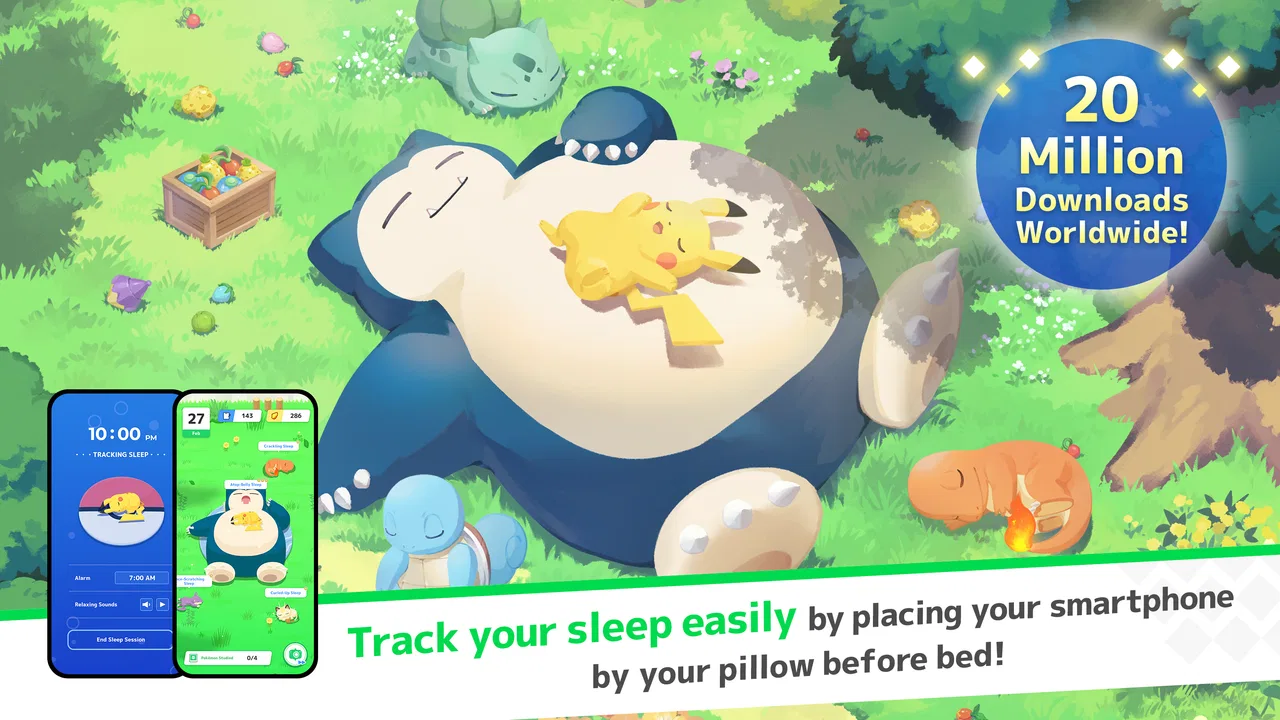
I found Pokémon Sleep most interesting when I treated it less like a traditional mobile game and more like a shared household ritual. The basic idea is simple: you sleep with a smart device tracking your rest, then return to discover Pokémon connected with different sleep styles. It sounds lighthearted, but the daily routine changes how the game feels. You are not trying to win a quick match during a spare minute; you are building a reason to check in after a night’s sleep.
That makes it a simulation game with an unusual pace. The Pokémon Company has built something aimed at people who already enjoy the characters but want a calmer experience than battles, collecting pressure, or fast reactions. I liked the way the game gives a small morning moment a bit of personality. At the same time, the sleep-tracking concept means it deserves more thought than an ordinary idle game, especially when several people in a home share devices, routines, or a Pokémon account.
How Pokémon Sleep fits into a shared household
In my experience, the best everyday use case is a household where one person wants a gentle reason to maintain a bedtime routine and another person is happy to participate without playing directly. A parent might enjoy the morning discovery while a child likes seeing which Pokémon appeared. Roommates could also enjoy comparing what they found, provided each person keeps their own activity and account boundaries clear.
You May Also Like

 Blood Strike: 2.5 Anniversary
Blood Strike’s Loadouts Turn Every Drop Into a Tactical Gamble
A close look at Blood Strike’s custom loadouts: how fast access to signature weapons reshapes its battle royale rhythm, rewards preparation, and narrows the gap between fights.

 Pandora - Music & Podcasts
Pandora’s Music Is Easy to Start, but Harder to Recover
Pandora’s strength is its low-effort path from a seed to a station. Its weak spot is how much confidence it asks you to place in connection, setup, and quiet recovery.

 8 Ball Pool
 Is Built on Rivalries, Rematches, and Routine
A close look at the rivalries, rematches, shared routines, and unanswered safety questions that turn a quick pool match into a persistent mobile community.

 Samsung Music
’s Quiet Strength Is Playing What You Already Own
Its reach comes less from spectacle than from dependable access to a personal library. That simplicity is both the app’s strongest retention engine and its ceiling.

 AccuWeather: Weather Radar
AccuWeather Review: A Quick, Clear Forecast for Everyday Decisions
For everyday plans, the best forecast is the one you can understand quickly. AccuWeather makes rain timing, radar, and local conditions easy to act on, with a few trade-offs.

 Hill Climb Racing
Why Hill Climb Racing Still Turns Crashes Into One More Run
A tiny car, a bumpy hill and one more upgrade: Hill Climb Racing keeps resurfacing because its simple chaos makes every near-miss feel personal.
More From Our News Desk
View All News


The important distinction is that this is not really a multiplayer activity in the usual sense. The fun comes from comparing experiences and talking about discoveries, not from placing several people into the same live session. I would not choose it for a family looking for a cooperative game with shared objectives. I would choose it for a home where people appreciate small, asynchronous moments that do not require everyone to be awake or available together.
A realistic evening might look like this: I finish using my phone, prepare the device for sleep tracking, and leave it in the position recommended by the app’s setup process. The next morning, I review the sleep session and see which Pokémon sleep styles were associated with it. Someone else in the household can ask what appeared, but they do not need access to my sleep information or my account to enjoy that conversation. That separation is one of the healthiest ways to use the game.
There is also a useful emotional difference between playing alone and playing around other people. When I play alone, the game becomes a private routine. In a household, it can become a small shared topic, like discussing breakfast or the weather. That works because the game’s central reward is discovery rather than competition. Nobody has to prove that their sleep was better, and nobody needs to log in at the same time.
Why the morning check-in works
The morning session is the strongest part of the design. Instead of asking me to make time for another demanding game, it attaches the experience to something I already do. The Pokémon theme gives the tracking process a playful layer, which can make a repetitive habit feel less clinical.
Still, I would avoid treating the game as a serious health authority. Its appeal is the connection between sleep tracking and Pokémon discovery, not professional diagnosis. If the information raises concerns about sleep quality, I would use it as a prompt to pay attention and seek appropriate advice, rather than treating an in-game result as a medical conclusion.
The routine is also easier to maintain when expectations stay modest. I do not need to turn every night into a perfect performance. A missed session can be disappointing because it interrupts the rhythm, but it should not become a source of guilt. The game works best when it encourages curiosity instead of making rest feel like homework.
What shared-device use changes
Households should decide early whether one physical device is being used for one sleeper or whether people are taking turns. Sleep tracking is personal, and a device that moves between beds can make the resulting record difficult to interpret. Even without inventing extra rules around the app, the practical principle is clear: the person whose sleep is being tracked should be the person whose account and session are active.
If a family passes one phone between bedrooms, I would be cautious. The arrangement may be convenient, but it can blur whose session is being recorded and who is responsible for the morning review. A dedicated routine for one user is much easier to understand. If several household members want to play, separate devices and separate accounts provide cleaner boundaries than trying to make one session represent multiple people.
This matters for children in particular. A child may enjoy the Pokémon discoveries, but an adult should decide whether the device is appropriate to leave near the bed and whether the child understands what the tracking routine is doing. The game has an Everyone content rating, which makes its presentation broadly approachable, but that rating does not replace ordinary household judgment about devices, bedtime, or personal information.
Setting up without losing control of the routine
The first setup is more important than it looks because the game depends on consistency. I would begin by deciding who is using it, which device will handle the nightly session, and where that device will be placed. Doing this before exploring the collection side prevents a common mistake: focusing on Pokémon first and treating the sleep routine as an afterthought.
The game is free to start, so there is no purchase decision required before trying the central loop. That is helpful for a household that wants to test whether the routine fits. I would use the free experience for several ordinary nights before considering any optional spending. A game connected to a daily habit should earn a place in the routine before it earns money.
There are in-app purchases ranging from $1.19 to $97.99 per item. That is a wide range, and it is exactly why I would establish a household spending rule before handing the device to a child. The free entry point is friendly, but the presence of paid items means “free” should not be confused with “without purchase decisions.” An adult-managed approach is sensible when younger players are involved.
I also recommend separating account ownership from device ownership. If a family tablet or phone is used by several people, the person whose sleep is tracked should know which account is active. A shared device can be practical, but a shared account can make personal progress and sleep records harder to keep distinct. The cleanest arrangement is not necessarily the most elaborate one; it is the one everyone in the home understands.
Boundaries that make the game easier to live with
I would set a nightly stopping point before opening the app for the final time. The game is supposed to accompany sleep, so browsing, collecting, or checking progress should not push bedtime later. This is a subtle trade-off: a sleep-themed game can support a routine, but any phone-based activity can also become a reason to keep looking at the screen.
For a family, a simple agreement helps: the game is checked at a convenient time in the morning, purchases require permission, and no one treats another person’s sleep record as a competition. These are not special features; they are household habits that protect the game’s best qualities. The less pressure people feel, the more likely the routine is to remain pleasant.
Another useful boundary is deciding what the game means when a night goes badly. I would not use a poor session as a reason to criticize a child or compare siblings. Sleep varies for ordinary reasons, and a simulation game cannot turn that variation into a fair score of someone’s effort. The Pokémon discoveries should remain the reward, not a judgment about the person who slept.
Compatibility is straightforward for many devices because the minimum operating system is Android 8.0. Before building the game into a household routine, I would still check that the intended phone or tablet can run the current version smoothly and has enough battery for the nightly setup. The current version is 3.2.0, so keeping the app updated is also part of avoiding preventable setup confusion.
Coordinating without turning it into a contest
Coordination works best when everyone has a different role. One person can manage the account and purchases, another can help a child understand the morning results, and each sleeper can keep responsibility for their own nightly session. This gives the game a social place without pretending that it is a shared save file or a competitive household scoreboard.
I found that conversation is more enjoyable when it focuses on sleep styles and Pokémon discoveries rather than numerical performance. Asking “What did you find this morning?” is more inviting than asking “Did you sleep better than me?” The first question supports the game’s playful purpose; the second can make a personal routine uncomfortable.
For couples or roommates, coordination may simply mean agreeing not to disturb the other person while setting up the device. If the phone needs to remain in a particular place for tracking, both people should know that before bedtime. A small practical conversation can prevent the app from becoming a source of annoyance, especially in a shared bedroom.
For parents, I would keep the adult role focused on supervision rather than constant checking. The child can enjoy the discoveries, while the adult handles account boundaries and spending decisions. That division respects the child’s interest without turning sleep information into something the child has to report or defend every morning.
Age, trust, and the limits of a playful tracker
The Everyone rating matches the friendly presentation I experienced. Pokémon makes the concept approachable, and the game does not require the intensity associated with many action-focused mobile titles. That makes it a reasonable option for families who want a calmer Pokémon-themed activity.
Even so, age suitability is not only about content. A younger player may not understand why a phone should remain in one place, why another person should not use their account, or why purchases need adult approval. Those lessons matter more than the cartoon presentation. I would explain the routine in plain language and make sure the child knows that the game is optional, not a test they can fail.
Trust also matters between adults. If one person is tracking sleep, the other should not assume that access to the device means access to every detail of the session. A shared household does not automatically mean shared personal records. Keeping that distinction clear makes the app easier to recommend to couples, families, and roommates.
I would also be careful with children who already worry about sleep. The discovery loop may feel encouraging to one child and pressuring to another. If the child starts asking whether a night was “good enough” for the game, I would reduce the emphasis on results or stop using it. The right response is not to push through every routine; it is to protect a healthy attitude toward rest.
For adults, the main trust issue is interpretation. The app can make sleep feel visible and engaging, but I would not let a Pokémon result determine whether I consider myself rested or unwell. It is better used as a gentle record and a source of daily curiosity. Anyone seeking detailed clinical analysis, professional guidance, or a broader health platform may be better served by a dedicated alternative.
How it compares with other simulation and sleep apps
Compared with a typical simulation game, Pokémon Sleep asks for patience rather than frequent interaction. Many mobile simulations let me build, manage, or collect whenever I want. Here, the central opportunity arrives around sleep, so progress is naturally tied to the night. That makes it less flexible than a conventional game but more distinctive.
Compared with a standard sleep tracker, it is more playful and less utilitarian. A dedicated tracker may be a better choice if I want detailed trends, broad health integrations, or a serious dashboard. Pokémon Sleep is the better fit when the motivation comes from characters, discovery, and a morning ritual. I would not install it expecting a replacement for every function of a health-focused tool.
Compared with Pokémon games built around battles or exploration, this one is deliberately slower. There is no need to reserve a long block of free time for a session, which suits busy adults and families. The trade-off is that anyone looking for immediate control, rapid progression, or constant action may find the pace too passive.
That slower design is also why the app can work in a household. A person can participate privately, then share the result socially. It does not demand that everyone coordinate a match, own the same console, or have identical schedules. But if the household wants direct teamwork, a more conventional multiplayer Pokémon experience would be a stronger choice.
Small strategies that improve the experience
My first practical tip is to protect the bedtime routine from the collection loop. Decide when the evening interaction ends, then leave the app alone. The value comes from allowing the night to pass, not from squeezing in one more check before sleep.
Second, keep the morning review short at first. Look at the session, enjoy the Pokémon discovery, and move on with the day. This prevents the game from becoming another task that has to be completed perfectly. If the routine naturally grows, that is fine, but it should grow because it is enjoyable rather than because the app has taken over the morning.
Third, use household conversation to add fun without sharing private details. A child can talk about the Pokémon they discovered without needing to inspect an adult’s sleep information. A couple can compare the playful outcomes while keeping the underlying routine personal. This is a surprisingly effective compromise for shared homes.
Fourth, test the physical setup before relying on it. Make sure everyone knows where the device goes, who starts the session, and who checks the result. Confusion at night is more likely to damage the habit than a lack of enthusiasm. A simple, repeatable process beats an ambitious arrangement that nobody follows.
Finally, wait before spending. The game’s free access makes experimentation easy, while the paid-item range means impulse purchases can become a real household issue. I would only consider spending after deciding that the game adds lasting enjoyment and after agreeing who controls purchases. This is especially important when the device is used by children.
My household verdict
With an average rating of 4.4 from around 120 thousand ratings and more than 10 million installs, the game has clearly reached a large audience. Those figures do not decide whether it belongs in your home, but they do reflect how unusual the concept is: it turns a private nightly activity into a gentle Pokémon-themed simulation.
I recommend it to Pokémon fans who enjoy collecting, adults who want a softer daily game, and households that can keep each person’s account and sleep routine separate. It is particularly appealing when the goal is a small morning conversation rather than a shared competitive session. The Everyone age rating also makes its presentation accessible, although adults should still guide device use and purchases for younger players.
I would skip it if you want precise health analysis, immediate gameplay, or a game that several people can actively play together. I would also avoid making it a household requirement. The concept loses its charm when sleep becomes a score to defend or a routine that children feel pressured to perform.
After using it as a calm companion rather than a strict tracker, I came away with a positive impression. Its strongest idea is not simply that Pokémon appear after sleep; it is that the game gives a quiet personal habit a little bit of shared warmth. The best way to enjoy Pokémon Sleep is to keep the tracking personal, the spending deliberate, and the Pokémon discoveries fun.
FAQs for Pokémon Sleep
01What is the main objective of Pokémon Sleep?
Pokémon Sleep is designed to track your sleeping patterns and reward you with Pokémon encounters based on how you sleep. The main objective is to improve your sleep habits while enjoying the game by interacting with Pokémon that appear according to the quality and duration of your sleep.
02How does Pokémon Sleep track my sleep?
Pokémon Sleep uses your smartphone's sensors to monitor your sleep patterns. By placing your device near your pillow, it can detect movements and sounds to determine different sleep stages. This data helps the app categorize your sleep as dozing, snoozing, or slumbering, which influences the Pokémon you encounter.
03Is Pokémon Sleep compatible with all devices?
Pokémon Sleep is available for both Android and iOS devices. However, it requires specific operating system versions to function correctly—usually Android 6.0 or later and iOS 11.0 or later. Check the app store details for compatibility with your specific device model before downloading.
04Can I play Pokémon Sleep without an internet connection?
While Pokémon Sleep requires an internet connection for initial setup and to access certain features, such as updates and syncing data, the app can track your sleep offline. However, you will need to connect to the internet periodically to update your sleep data and receive rewards.
05Are there any in-app purchases in Pokémon Sleep?
Yes, Pokémon Sleep offers in-app purchases. These purchases typically include items or features that enhance the gaming experience, such as premium content or additional customization options. While not necessary to enjoy the core features, they can provide added convenience or enjoyment for players.
Pros
- Engaging sleep tracking mechanics.
- Fun interaction with Pokémon characters.
- Simple and user-friendly interface.
- Motivates healthier sleep habits.
- Regular updates with new features.
Cons
- Limited to specific sleep patterns.
- Requires consistent internet connection.
- May drain battery overnight.
- In-app purchases for premium features.
- Limited integration with other devices.

Pokémon Sleep
Gallery